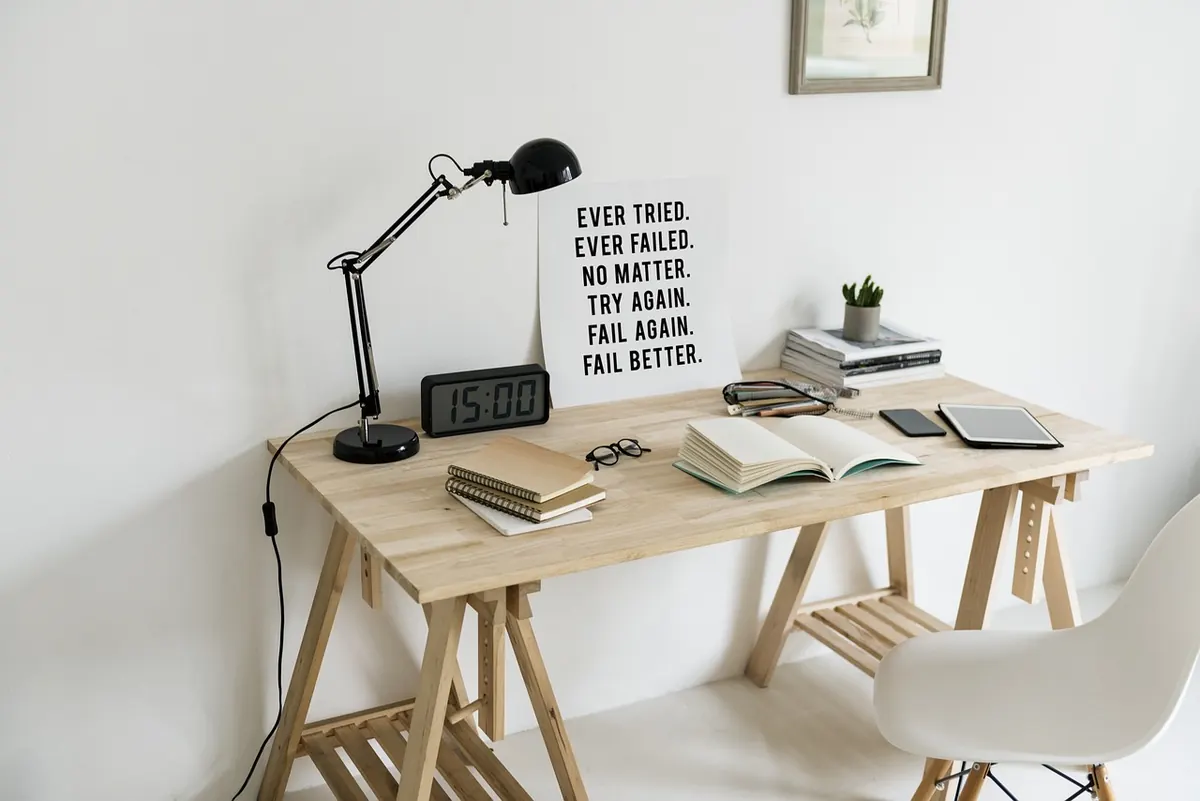
7 Common Mistakes That Ruin Your Wind-Down Routine

You have the candle. You have the herbal tea. You even put your phone on the windowsill at nine o'clock. And yet, most nights, you're still lying there at midnight while your brain compiles a to-do list.
That's the frustrating thing about wind-down routines. The shape of them is usually fine. It's the details that quietly undo the work — a coffee at four, a ceiling light left blazing, a "quick look" at email that turns into forty minutes. Here are the seven slips that ruin more evenings than any of us would like to admit, and what to do instead.
1. Drinking caffeine with a longer tail than you think
Caffeine doesn't stop working when you stop feeling it. A rough rule of thumb is that half of it is still circulating several hours later, which means the 4pm flat white is really a 10pm flat white in disguise. Sensitivity varies enormously. You may be the person who sleeps soundly after an espresso, or the person who loses an hour of sleep to a cup of tea at six.
Try working backwards from your bedtime and cutting caffeine roughly eight to ten hours before you plan to sleep. Then judge it over a week rather than a single night. Check the less obvious sources too: cola, energy drinks, chocolate, some green teas and certain cold remedies. If an afternoon slump is what sends you to the kettle, a short walk and a large glass of water usually takes the edge off without the cost.
2. Lighting your evening like a film set
Nothing tells your brain that the day is still in full swing quite like a bright ceiling light at nine in the evening. Overhead, cool-white glare is the lighting of a workplace, not a living room. You don't need to sit in gloom, but you do want to bring the light down — literally, and in warmth.
Swap the main light for two or three lamps at shoulder height or lower, and choose warm bulbs where you can. Dim whatever is dimmable. If you're cooking or tidying, keep the bright light for the task and switch it off the moment you sit down. Candles are lovely, but they're mostly doing mood work; the real gain comes from removing the overhead glare and letting your eyes adjust to a softer room.
3. Turning your wind-down into a project
Somewhere along the way, relaxing before bed became a twelve-step protocol with an app, a tracker and a side order of guilt. The more moving parts a routine has, the more likely it is to collapse on a Tuesday — and the more you notice when it does.
Two anchors, repeated most nights, beat a flawless routine you manage twice a week. Pick one thing that lowers the lights and one thing that lowers the pace: a shower, ten pages of a novel, stretching on the floor, a few minutes of slow breathing by an open window. That's the whole thing.
The minimum worth aiming for:
- lights down and screens out of reach for the last hour
- something warm to drink that isn't caffeinated or alcoholic
- tomorrow's essentials written down, so your head can put them aside
- roughly the same bedtime and wake time, weekends included, most of the time
4. Using alcohol as the off switch
A drink does make you feel drowsy. It also tends to fragment the second half of the night, which is why the 3am wake-up is such a familiar companion to a large glass of wine. You can fall asleep faster and still wake unrefreshed, with a dry mouth and a flat mood.
If you do drink in the evening, timing helps: a drink with dinner is generally kinder to sleep than one at ten o'clock. Alternate with water, and keep the last hour clear. If you've noticed that you need a drink to get to sleep at all, that's worth raising with your GP rather than quietly working around.
5. Scrolling instead of settling
Not all screen time is equal. The problem usually isn't the glass and the pixels; it's the arousal. Email, news, group chats, shopping baskets, replies you'll regret — all of it keeps the mind in problem-solving mode, which is the opposite of what you're trying to build.
Give the phone a bedtime earlier than your own. If you can, charge it in another room and use a cheap alarm clock instead; that single change does more than most apps. If you read on your phone, set it warm and dim, silence notifications, and decide before you open it that you're reading a book rather than checking anything.
6. Starting the wind-down at bedtime
If you climb into bed at eleven and expect to be asleep by ten past, you've left the runway far too short. The shift from doing to resting isn't instant, and it certainly isn't available on demand.
Choose a clock time rather than a feeling. If bedtime is 11pm, the wind-down starts at 9.45 — a fixed signal that the day is closing, whether or not you feel tired yet. Equally, don't bundle yourself into bed at nine out of desperation when you're wide awake. Lying there frustrated teaches your brain that bed is a place of effort. Do the winding down in the living room, and go to bed when you're genuinely sleepy.
7. Making the bedroom a second living room
Laptops, laundry piles, spreadsheets, difficult phone calls, half-eaten toast — beds end up hosting the lot. That's understandable in a small flat, but it blurs the association you're trying to strengthen.
Keep the room cool, dark and slightly boring. If you've been lying awake for around twenty minutes, get up rather than toughing it out: keep the lights low, do something dull for a while, and go back when sleepiness returns. That's not failure. It's the routine doing its job.
Rebuilding the routine tonight
You don't have to fix all seven at once, and trying to will only create another project to fail at. Pick the two that made you wince, and change those.
- Set tomorrow's caffeine cut-off now — a time, not a good intention.
- Replace the overhead light with lamps after dinner.
- Move the phone charger out of the bedroom.
- Write tomorrow's list before you brush your teeth.
- Keep the same wake time, whatever happened overnight.
Give it a fortnight before you decide whether it's working; a single restless night tells you almost nothing. And if sleep is a struggle most nights for weeks on end, or you're snoring heavily, waking gasping, or exhausted despite plenty of time in bed, see your GP. Some sleep problems need a proper conversation, not another candle.
Photo: SHVETS production / Pexels